The site
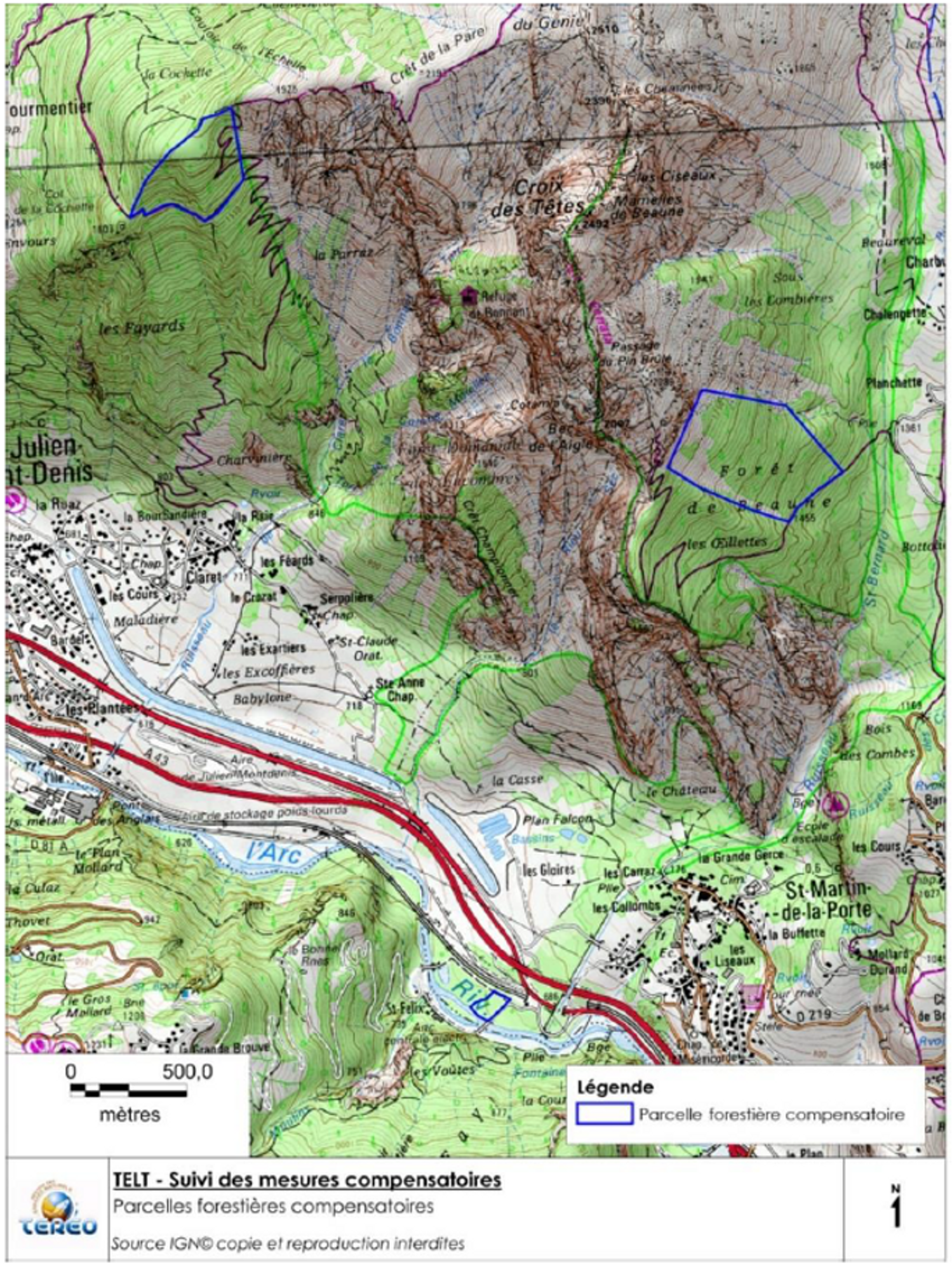
Two forest plots, totaling approximately 20 hectares, located respectively above the Col de la Cochette in Saint-Julien-Montdenis and in the Beaune forest on the Croix des Têtes slope in Saint-Martin-la-Porte, are designated as senescence islands.
Key issues
Forest exploitation, when motivated strictly by economic considerations or by a lack of knowledge of sustainable management practices and environmental issues, can lead to biodiversity loss. In particular, clear-cutting and even-aged forest management practices (i.e., forests where all trees are of the same age) should be avoided from a biodiversity perspective.
The absence of forest management allows both the aging of trees and the natural regeneration of the forest. All vegetation layers become established: the herbaceous layer, where flora develops; the sub-shrub and shrub layers occupying intermediate levels beneath the forest canopy; and the tree layer, composed of mature trees that continue to grow in order to access as much light as possible.
Modifying forest management plans by prohibiting any harvesting in forest stands previously open to exploitation helps prevent harmful silvicultural operations and guarantees the long-term, undisturbed aging of the forest plots concerned.
Partners
Municipalities of Saint-Julien-Montdenis and Saint-Martin-la-Porte, National Forestry Office (ONF).
Objectives
Amend the forest management plan to designate the forest plots as senescence islands.
Improve habitat opportunities for cavity-dwelling wildlife
Monitor the evolution of species habitats and wildlife populations on the site
Discover…
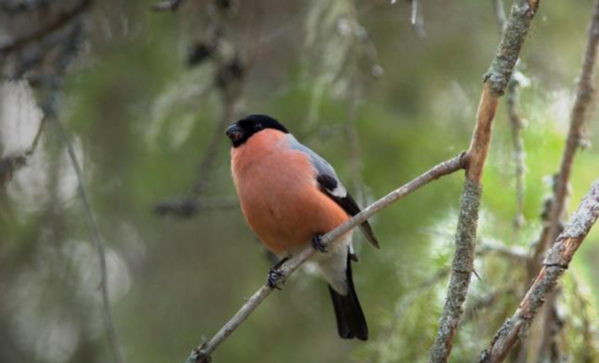
The Eurasian bullfinch. This small, plump bird, about the size of a sparrow, is recognizable by its characteristic and very elegant rosy-red plumage. This coloration may also suggest its shy and sensitive nature. The Eurasian bullfinch mainly inhabits cool, wooded environments, particularly spruce and fir forests in mountainous areas. It can also be found in lowland deciduous woodlands along rivers, as well as in parks, gardens, hedgerows, and orchards, where it feeds and finds shelter in case of danger. Like many bird species, the Eurasian bullfinch is protected at national level: this protection applies both to individuals and to their habitats.