The site
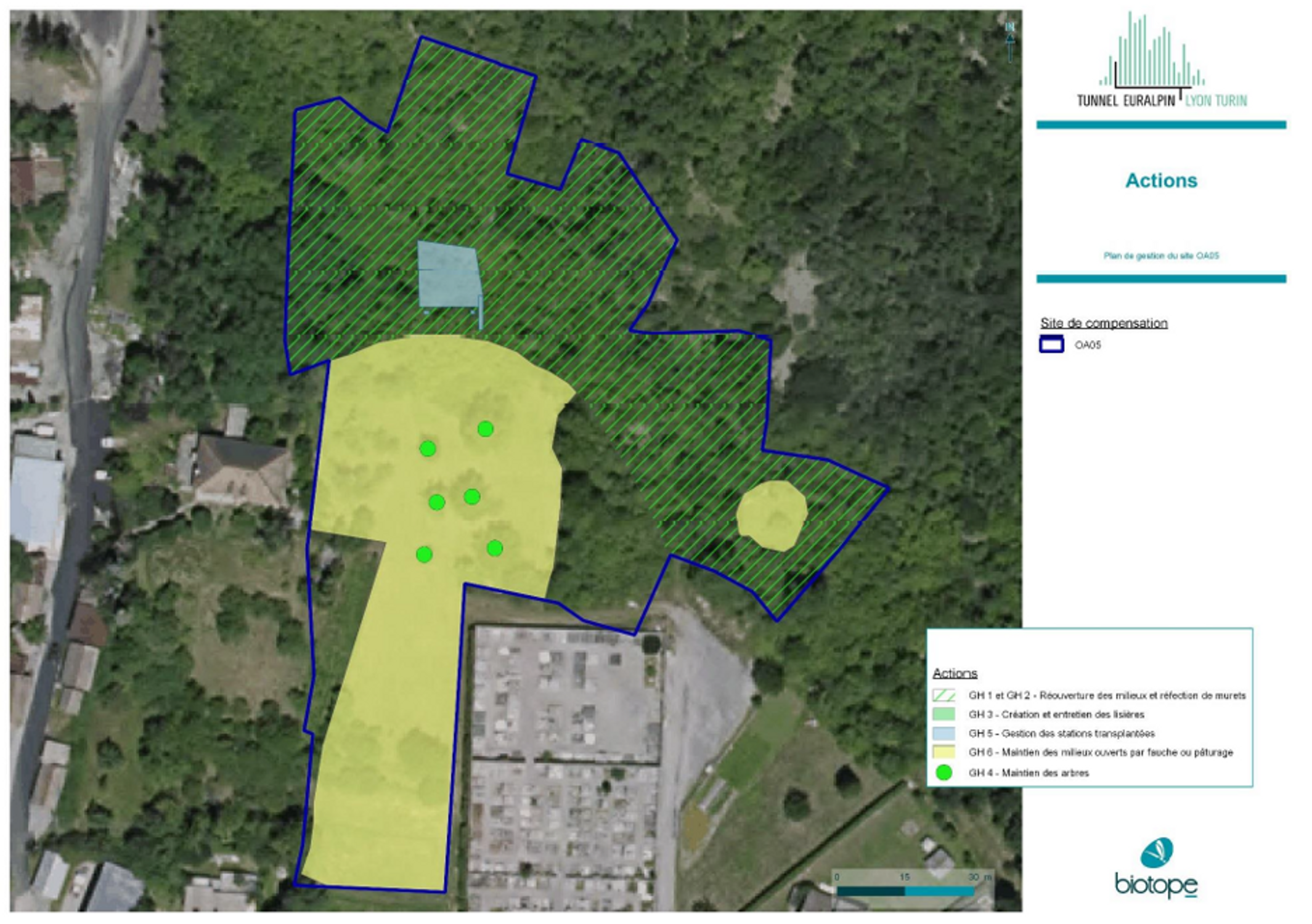
This site borders the cemetery of Saint-Julien-Montdenis. It includes an orchard, small meadows, one of which hosts beehives, and overgrown or even wooded terraces that were formerly planted with vineyards and abandoned since the 1950s. Covering an area of approximately 1.3 ha, it forms a transition between the urbanized area of the village center of Saint-Julien-Montdenis and the steep wooded slope above it.
Key issues
The site hosts a few specimens of a plant species identified in the literature as belonging to the taxon Tulipa mauriana, an extremely rare species endemic to the Maurienne valley and now considered extinct in the wild. Given that the flowering rate of this species is low and that its identification can only be confirmed when flowers are present, the formal identification of the populations found on the site still remains to be verified. However, the site certainly hosts another tulip species, the early tulip, as well as the field gagea. In addition to its flora, the site also provides habitats favorable to various groups of fauna: birds, including a mixture of forest species, garden species that readily approach human dwellings, and hedgerow species; reptiles, which appreciate the stone walls of the former terraces; butterflies; bats; and more. A few Alpine ibex even descend to graze in front of the cemetery and nearby houses during the colder season. However, the presence of this remarkable mix of species depends on a delicate balance and is threatened by several factors: scrub encroachment and habitat closure resulting from the abandonment of traditional activities (particularly on former vineyard terraces), the expansion of human activities at the expense of natural habitats (cultivated gardens, cemetery), and inappropriate management of open areas (grazing or mowing too early, repeated vehicle traffic).
Partners
Private landowner
Objectives
Increase the area of habitats favourable to tulip development and diversify habitats for wildlife.
Implement management practices favourable to the maintenance of existing protected plant species populations.
Limit the spread of invasive alien species.
Raise landowners’ awareness of ecological issues.
Improve knowledge of the site's wildlife.
Monitor the evolution of animal and plant species populations on the site.
Discover…
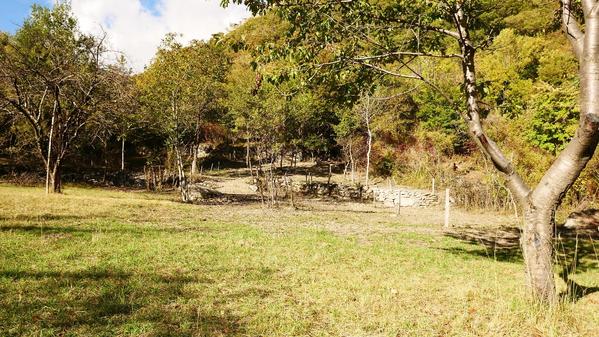
The old terraces.Once home to vineyards, cultivated or mown plots, they were abandoned more or less abruptly during the last century.No longer maintained, scrub, shrubs and young trees have now colonised them, and some of the retaining dry stone walls have collapsed.They nevertheless represent a historical and socio-cultural heritage of the valley that deserves to be enhanced.The rebuilt dry stone walls, made without cement, provide an ideal habitat for reptiles.The controlled removal of scrub, while maintaining wooded patches and managing edges, allows flora and insects to recolonise them, thereby promoting greater diversity in bird, bat, and mammal communities that use them for feeding and reproduction.