The site
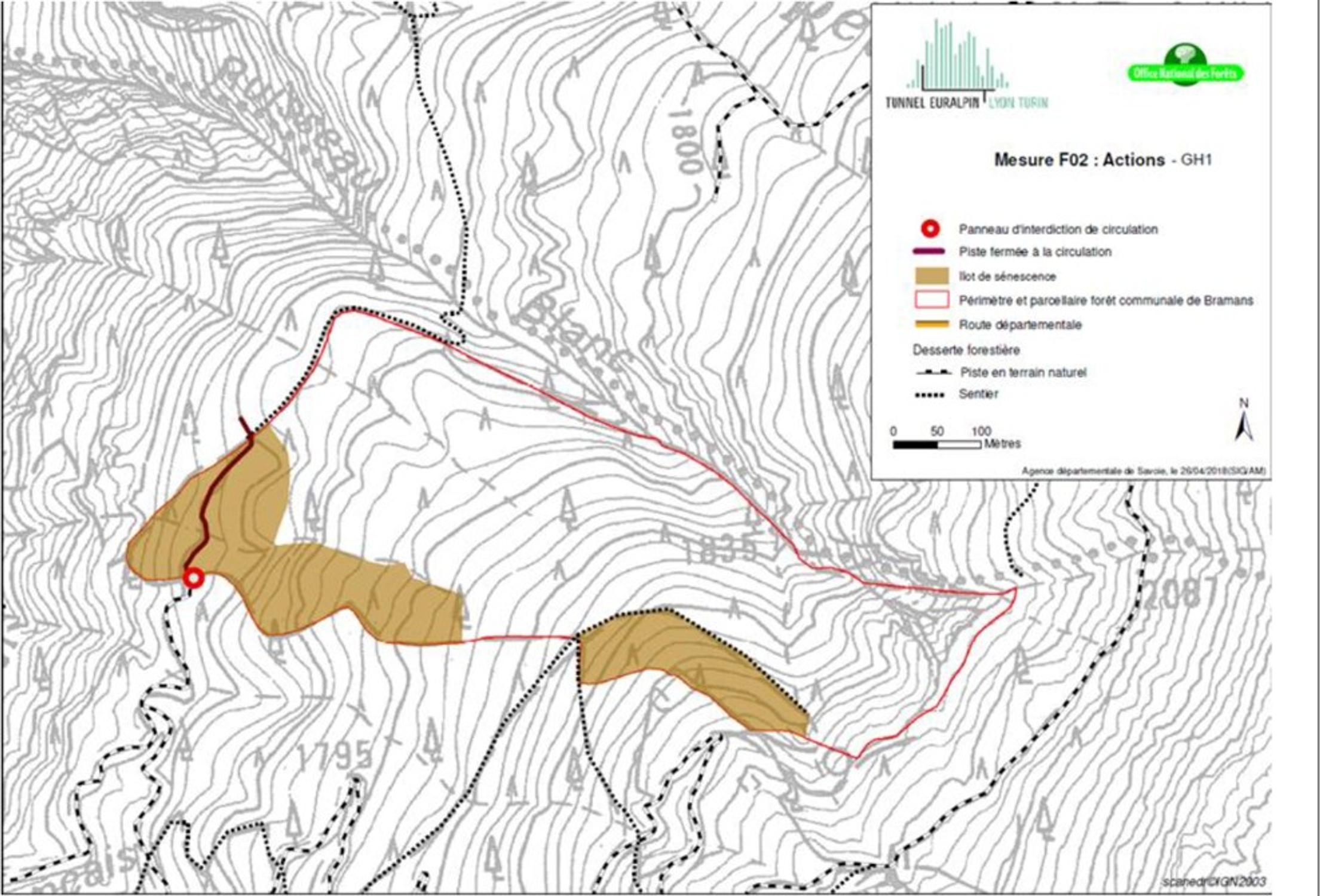
Two forest plots located above the village of Bramans make up this ecological compensation site, which covers a total area of 5.6 hectares. It is situated within a large north-west-facing forested slope. Within the compensation plots, Mountain Pine is the dominant tree species, although Norway Spruce is also present and even dominant in certain areas, resulting in a variety of vegetation types. The forest grows on a shallow, nutrient-poor gypsum substrate.
Key issues
These forest plots were selected for two main reasons: firstly, because of the abundant presence of Snow Heath, which forms extensive carpets, and secondly, because of the potential threats posed to this species by forestry activities. The predominant natural habitat of these plots—mountain pine forest on gypsum or limestone substrates, especially on north-facing slopes—is a particularly remarkable and rare biotope that supports an equally remarkable plant species: Snow Heath. Although this species can be found forming extensive carpets in the forests around Modane and Lanslebourg, elsewhere in France it occurs only in a small area of the Tarentaise Valley and the Maritime Alps. It disappeared during the last century from the Épine mountain range and the Bornes massif. At Bramans, its presence may be threatened by forestry operations, whether through tree harvesting or the construction of forest access tracks. For this reason, TELT selected two plots that had originally been identified as suitable for timber production in the municipality’s forest management plan, in order to prohibit all commercial logging there over the next 50 years and promote the natural ageing of the forest.
Partners
The municipality of Val-Cenis
Objectives
Achieve or maintain a good conservation status for habitat types and for existing populations of protected plant species
Monitoring the evolution of habitat types and plant species populations on the site
Discover…
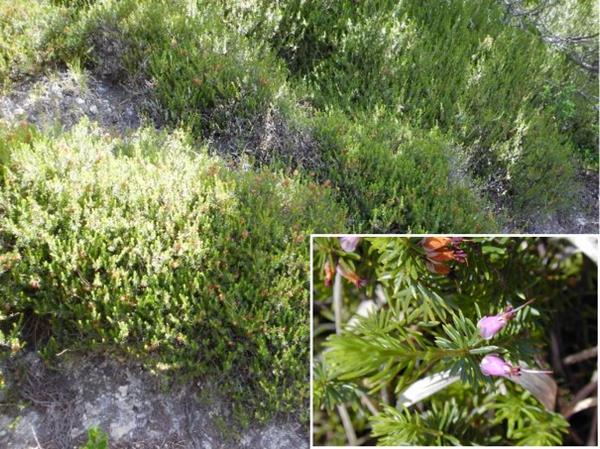
Snow Heath.It is the only known representative in Savoie of the genus Erica, excluding of course the various cultivated heathers—belonging both to the genus Erica and to other genera—commonly used in gardens. Its small bell-shaped flowers, of a bright pink colour, bloom as soon as the snow melts, from February to June depending on altitude and exposure. Grouped in short clusters, they create a remarkable visual display when found in dense carpets, especially where tree cover is not too dense. In France, this protected species is rare and occurs only in three departments. This area represents the western limit of its distribution range, as it is more widespread in the mountains of southern and central Europe, particularly in Italy, Switzerland, Germany, Austria and the former Yugoslavia.