The site
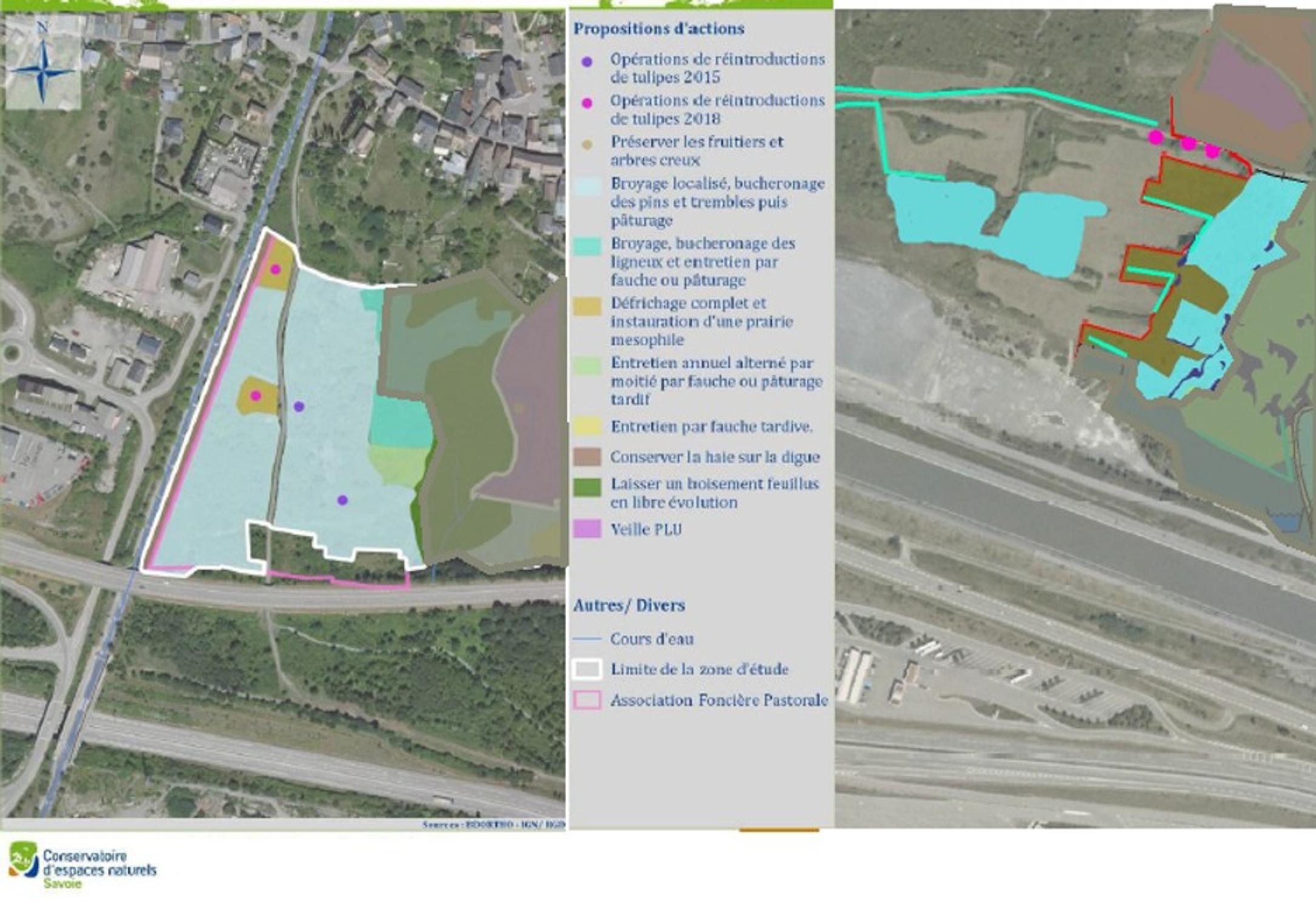
This site consists of two groups of plots located on the outskirts of the village of Saint-Julien-Montdenis, on the valley floor. Covering a total area of approximately 5 hectares, it is composed of former fallow land that has been restored into grasslands.
Key issues
In the middle of the last century, most of the valley-bottom land, where slopes remained moderate, was still cultivated or mown. The stone walls, stone heaps (accumulations of stones removed over time from meadows, a typical and heritage feature of many Alpine regions), and terraces are still visible today as evidence of this former land use, which has greatly declined due to agricultural abandonment and the transformation of mountain societies over recent decades. At the outset, this compensation site consisted mainly of dense and compact fallow land bordering dry grasslands. A few young woodlands and small relict grasslands undergoing natural encroachment were also present. Remarkable species still persisted, but remained threatened by the gradual closure of the habitat. The removal of a large part of the scrubland, combined with soil preparation and the sowing of a mix of local grassland species through substantial ecological restoration work, aims to restore a better balance between dry grasslands and the surrounding shrub habitats. Mature trees are preserved, stone walls are once again exposed to sunlight, recolonisation by scrub is controlled through mowing and grazing, and the development of habitat edges is managed. In this way, the site becomes suitable once again for numerous remarkable species from almost all taxonomic groups: farmland and hedgerow birds, reptiles, bats, arable flora (including the early tulip and sand leek), and insects.
Partners
Thyl Pastoral Land Association, Savoie Conservatory of Natural Areas
Objectives
Restoration of a mosaic of shrub and open habitats
Carrying out works and improvements necessary to maintain agricultural activity
Monitoring the evolution of plant and animal species populations and their habitats on the site
Discover…
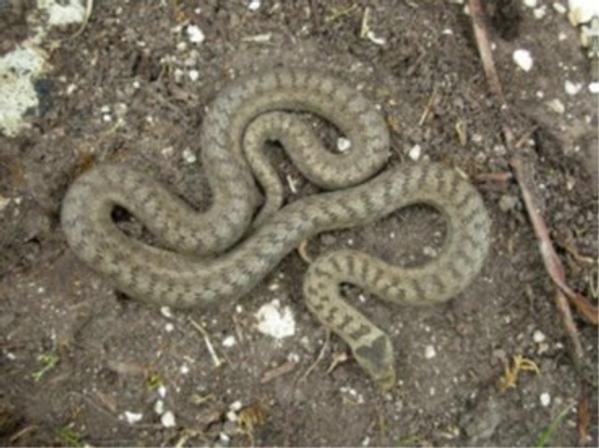
The smooth snake.The detection of reptiles, with the exception of the most common species such as wall lizards and green lizards, proves to be particularly difficult since they rank very high among the most discreet wildlife species.They notably find refuge on this site in the numerous dry stone walls: more than 1.5 km of walls have been counted across the entire area!The walls exposed to the sun, both due to their southern exposure and limited vegetation cover - the presence of some vegetation in front of the walls not being particularly harmful - are especially interesting.The smooth snake is a snake whose presence is linked to that of lizards, which constitute the main part of its diet.This species was not recorded on the site before restoration works, but, as these have significantly increased the presence of lizards and its preferred habitats, it is possible that it will find the Poutet/l’epine and Rieu-sec site to its liking.