The site
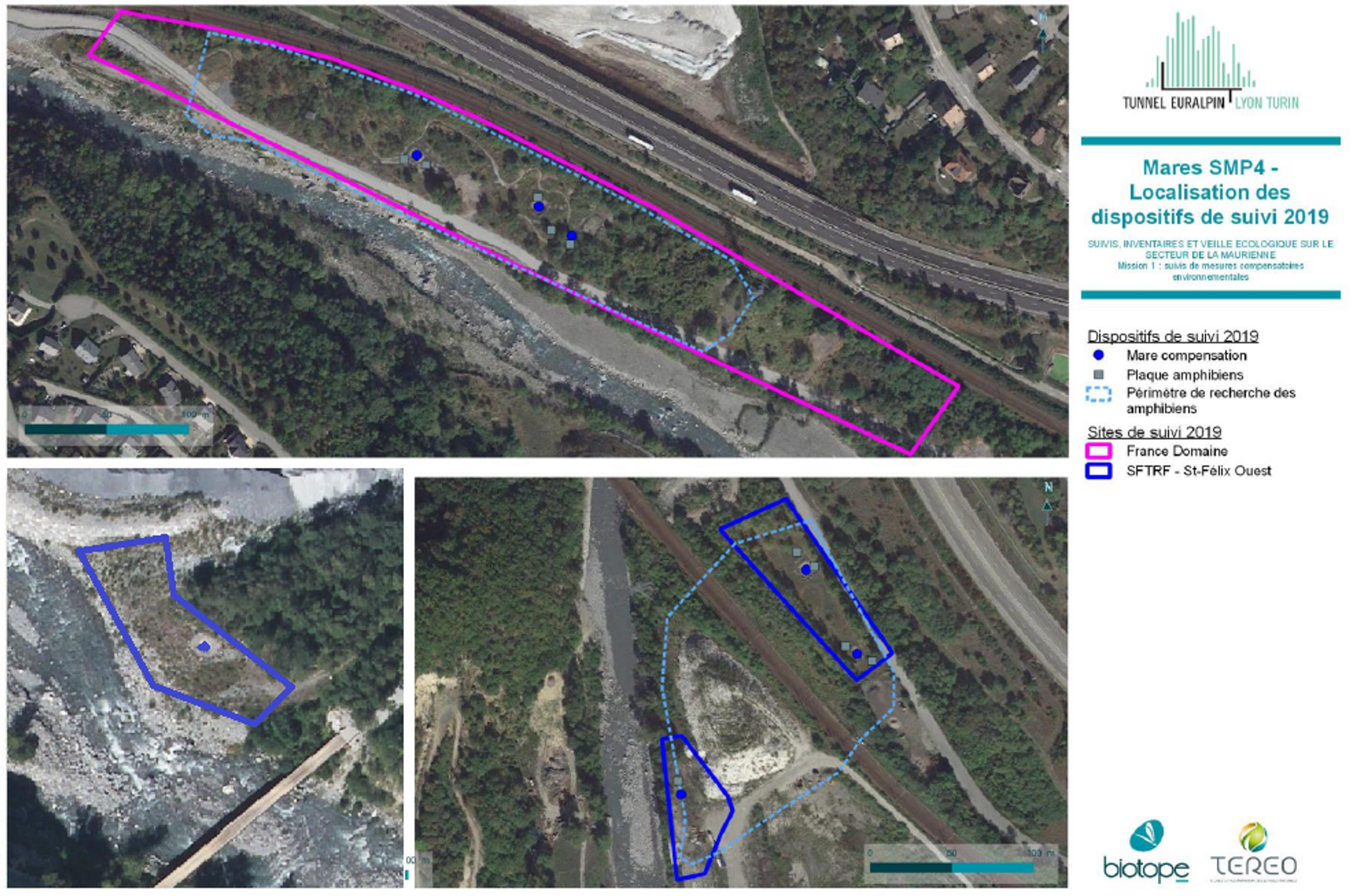
This measure consists of a group of four small sites located on the valley floor, within the few remaining undeveloped and open areas near the Arc River, and includes a total of seven ponds.
Key issues
The objective of this measure is to recreate, on the valley floor between Saint-Jean-de-Maurienne and Saint-Michel-de-Maurienne, a network of temporary ponds favorable to amphibians, particularly the natterjack toad.
The sites are located relatively close to one another in order to create a sufficiently connected network and allow interactions among all the compensation ponds created by TELT. The primary target species is the natterjack toad. This amphibian does not tolerate competition well from other species, especially frogs, and therefore seeks water bodies that have not yet been colonized by other amphibians: so-called “pioneer” ponds, which are shallow, highly mineral in character, and may dry out during the summer.
The occurrence of this type of naturally suitable habitat has generally declined due to urbanization and river engineering works. As a result, the natterjack toad has found substitute habitats in areas strongly influenced by human activities, such as industrial wastelands and quarries, where even a small puddle may be sufficient for breeding. However, the long-term persistence of these water bodies is not guaranteed, and disturbances caused by human activities can create significant mortality risks.
The purpose of this measure is therefore to create temporary ponds (i.e., ponds that dry out during summer) with these specific characteristics—mineral substrates, shallow water depths, and limited or even absent aquatic vegetation—that are sustainable over time and protected from disturbance.
Partners
State, SFTRF
Objectives
Create habitats favourable to amphibians, particularly the Natterjack Toad.
Raise public awareness of ecological issues.
Monitor the evolution of amphibian and plant populations on the site.
Discover…
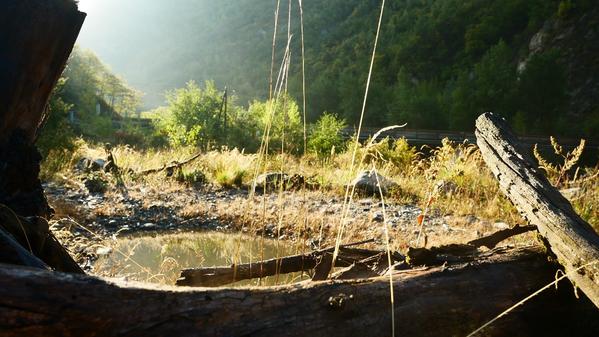
The pond. Depending on its characteristics, each pond will not attract the same species. Permanent ponds, which are relatively deep and fairly vegetated or shaded by vegetation, are favored by common green frogs and marsh frogs, which quickly colonize them. Pioneer species such as the natterjack toad instead seek more uncertain water bodies with a strong mineral character and shallow water depth (which warms up quickly in the sun, thereby accelerating tadpole growth), at the risk of early drying out, favoring a high number of spawnings at the expense of a lower probability of success for each reproductive event.