Objectives of the monitoring
Aquatic fauna and flora present in a watercourse are strongly influenced by the morphology of the environment (riverbed characteristics, shading, etc.), the chemical composition of the water, and hydraulic conditions (flow rates). Hydrobiology is the study of this aquatic fauna and flora. In the present case, hydrobiological quality monitoring focuses more specifically on small plant organisms and invertebrates, which represent the first two levels at the base of the aquatic food chain.
TELT’s activities, depending on their nature, may have direct influences on morphology, physicochemical composition, or hydraulic conditions—such as watercourses receiving effluent discharges, bank reinforcement works along the Arc River, or potential modifications to the flow regime and water supply of Arc tributaries through hydrogeological influences. These impacts may, or may not, have more or less indirect repercussions on the ability of these environments to support and sustain life. Hydrobiological quality monitoring therefore complements the monitoring of the physicochemical quality of surface waters, geomorphological monitoring, hydrological monitoring, and monitoring of aquatic habitat quality (see the dedicated fact sheets on these topics), in order to better understand any consequences of changes detected through these other areas of investigation. Hydrobiological quality is a more sensitive and less abstract environmental aspect than physicochemistry or geomorphology. The hydrobiological monitoring carried out by TELT is intended to detect possible variations within the environment, but its interpretation must also rely on the other water-related monitoring programmes conducted by TELT in order to determine, where relevant, the causes of such variations.
The key indicator
The IBD score
“IBD” stands for Diatom Biological Index. Diatoms are microscopic unicellular algae that colonise watercourses and can be sampled by brushing stones and pebbles from the riverbed. The IBD is an indicator whose score is based on the identification and counting of the diatom species present in a sample. In a healthy aquatic environment, its various components, including its diatom communities, form a dynamic balance that supports biodiversity and numerous uses (drinking water supply, livestock watering, irrigation, bathing, fishing, etc.). Conversely, in a disturbed environment, sensitive species tend to disappear while tolerant species become more abundant, resulting in an overall decline in biodiversity.
Partners
The consultancy firm commissioned by TELT and its specialised subcontractor: Géotec and STE
Characteristics of the monitoring
BD score Abundance Number of genera Number of species Community diversity index Evenness Specific pollution-sensitivity index
IBG-DCE score Abundance Number of taxa Indicator group Robustness
The IBD score and the IBG-DCE score are indicators that make it possible to summarise a set of sub-indicators and data according to a precise and standardised method.
Discover…
The difference between IBD and IBG-DCE
The Diatom Biological Index (IBD) characterises diatom populations, which are microscopic unicellular algae ranging in size from 5 to 500 µm depending on the species—they are therefore normally not visible to the naked eye. It thus focuses on a plant community, a “producer” in the food chain.
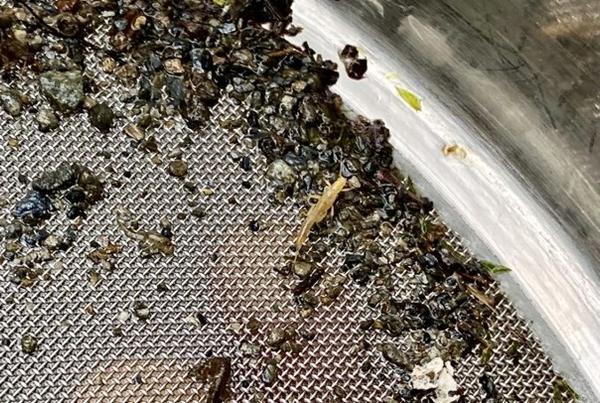
The Global Biological Index assessed according to the Water Framework Directive (IBG-DCE) characterises populations of benthic macroinvertebrates, meaning small organisms (larvae, insects, molluscs, worms) living on the bottom of watercourses and reaching, in adulthood, sizes of the order of millimetres—they are therefore visible to the naked eye. It focuses on an animal community, a “consumer” in the food chain, which itself is consumed by other aquatic fauna such as fish.